
CBT vs DBT: Which Therapy Approach Is Right for You?
iBeing Editorial · 28 September 2026 ·
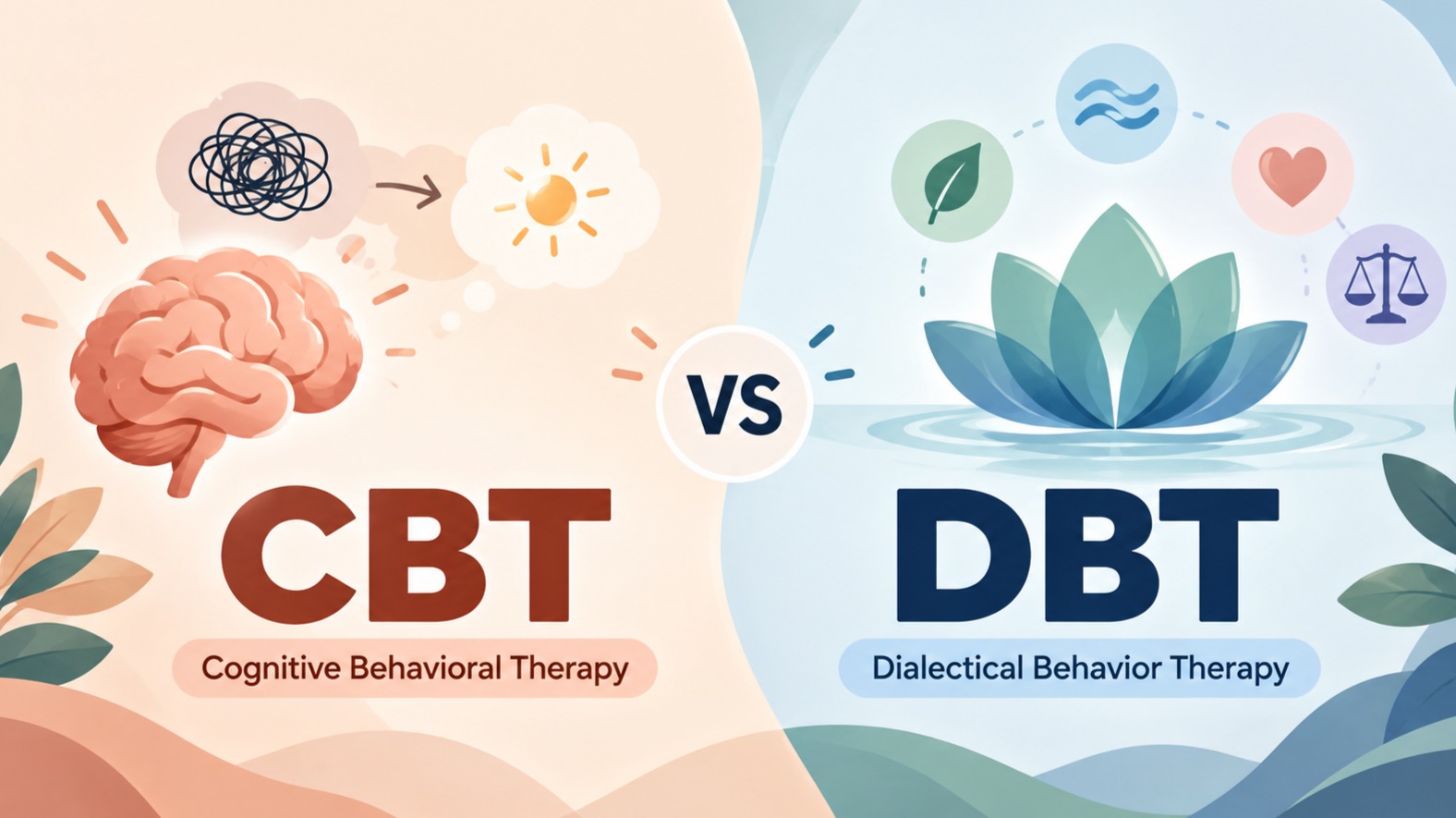
If you've started researching therapy, you've probably run into a wall of acronyms — CBT, DBT, MBCT, REBT — with very little explanation of what actually separates them. Two of the most commonly used, evidence-based approaches are Cognitive Behavioral Therapy (CBT) and Dialectical Behavior Therapy (DBT). They share some DNA, but they're built for different things.
Here's a clear, practical breakdown.
What Is CBT?
Cognitive Behavioral Therapy helps you identify and change negative thought patterns and the behaviors that come from them. The core idea: your thoughts, feelings, and actions are all connected — and if you can catch and challenge distorted or unhelpful thoughts, your emotional response and behavior shift too.
What a typical CBT session might involve:
Identifying a specific negative thought pattern (e.g., "I always mess things up")
Examining the evidence for and against that thought
Replacing it with a more balanced, realistic thought
Practicing new behaviors that reinforce the shift (e.g., gradually facing something you've been avoiding)
CBT tends to work well for:
Anxiety (generalized anxiety, social anxiety, panic)
Depression
Phobias
Insomnia
Work-related stress and overthinking
What it feels like: Structured and goal-oriented. You'll often have specific exercises or "homework" between sessions — thought records, behavior experiments, or gradual exposure tasks. It tends to be more short-to-medium term, with a clear sense of progress you can track.
What Is DBT?
Dialectical Behavior Therapy was originally developed for people experiencing very intense, hard-to-regulate emotions, and it teaches emotional regulation, distress tolerance, and interpersonal effectiveness. Where CBT focuses heavily on changing thoughts, DBT puts equal weight on accepting difficult emotions while building skills to manage them — the "dialectic" is holding both acceptance and change at once.
DBT is typically built around four skill areas:
Mindfulness — staying present instead of getting swept into emotional spirals
Distress tolerance — getting through intense moments without making things worse (without avoidance, self-harm, or impulsive decisions)
Emotional regulation — understanding and managing intense emotional reactions
Interpersonal effectiveness — communicating needs and boundaries clearly, especially in high-conflict relationships
DBT tends to work well for:
Intense mood swings or emotional reactivity
Difficulty regulating anger or impulsivity
Chronic relationship conflict
Self-harm urges or a history of them
Borderline personality disorder (its original clinical use)
Anyone whose emotions feel like they escalate faster than they can manage
What it feels like: More skills-based and structured than CBT in some ways, often involving specific practice techniques for in-the-moment crisis management, not just reflective conversation.
The Core Difference, Simply Put
CBT asks: "Is this thought accurate, and how do I change it?"
DBT asks: "This feeling is real and valid — how do I get through it without making things worse, while also building new patterns?"
CBT is generally a good starting point if your main struggle is a pattern of unhelpful thinking (worry loops, catastrophizing, self-criticism) that's driving anxiety or low mood. DBT tends to be a better fit if your main struggle is the intensity and speed of your emotional reactions themselves — feeling like your emotions take over before you can think clearly.
Can They Be Combined?
Yes, and often are. Many therapists draw from both, especially since DBT actually evolved out of CBT. A therapist might use CBT-style thought work for your anxious thinking patterns while introducing DBT distress tolerance skills for moments when things escalate quickly. You don't need to diagnose yourself into one box — a good therapist will figure out the right blend based on what you bring to sessions.
How to Decide Which to Start With
Ask yourself:
Do I mostly struggle with specific worries or negative thought loops? → CBT is likely a strong starting point
Do I mostly struggle with emotions that feel too big, too fast, or hard to control? → DBT skills may help more directly
Am I dealing with both? → That's common — a therapist trained in both can tailor the approach as you go
The label matters less than finding a therapist who listens to your specific situation rather than applying a one-size-fits-all framework.
Next Step
If you're not sure which approach fits, that's a completely normal place to start from — you don't need to have it figured out before your first session. Find a therapist matched to your needs at iBeing, and they'll help identify the right approach with you.
This article is for general educational purposes and isn't a substitute for a professional clinical assessment.
Real Stories from People

Start your journey inward.
Start your wellness journey today one breath, one step at a time.
