
The ROI of Employee Mental Health Programs: What Indian Companies Are Learning
iBeing Editorial · 28 September 2026 ·
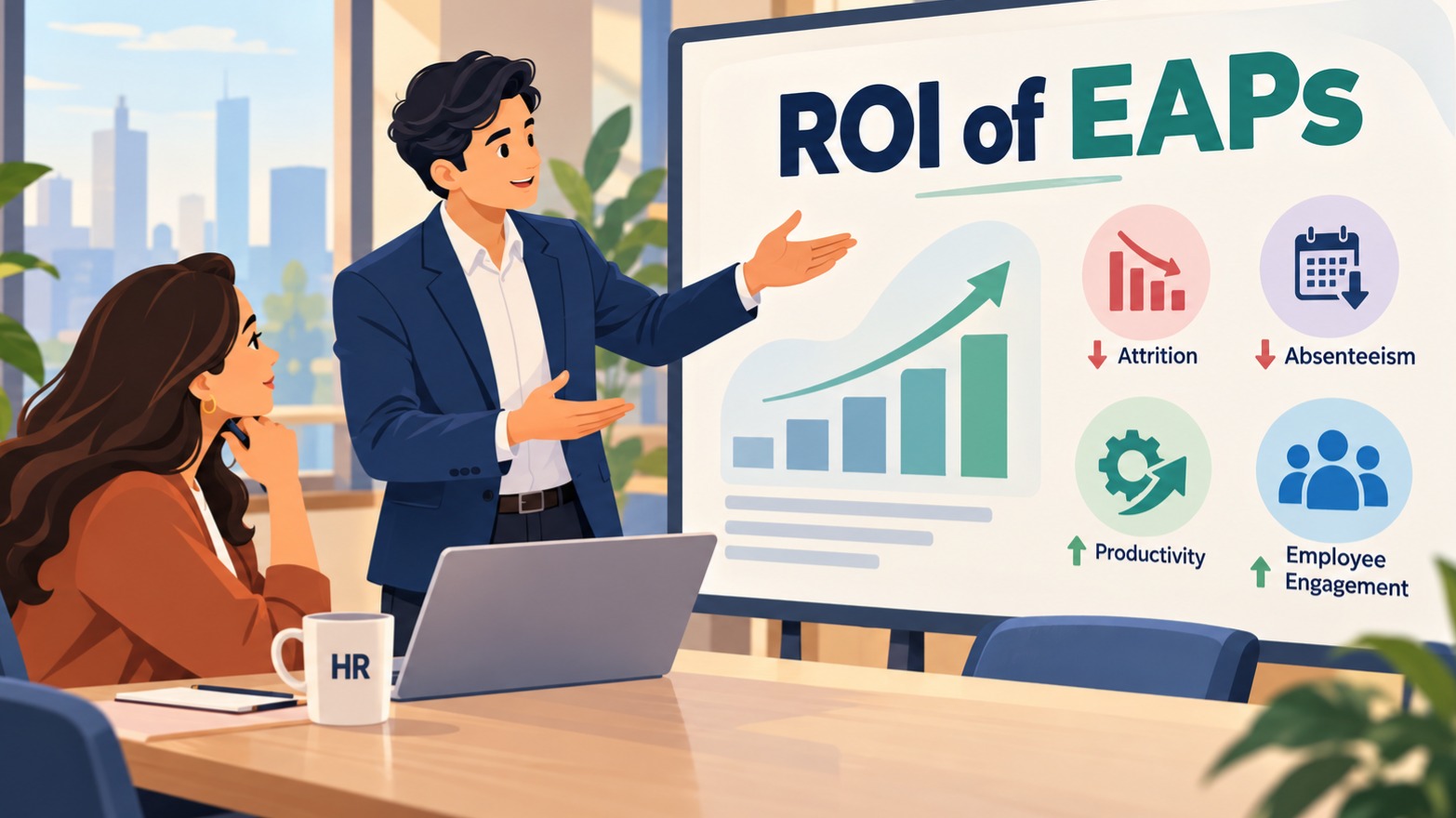
A few years ago, "employee wellness" in most Indian companies meant a gym membership discount and an annual health check-up. That's changing fast. Companies are increasingly expanding employee assistance programs (EAPs), online counseling services, and workplace wellness initiatives specifically to address stress, burnout, and emotional health among employees — and it's no longer being treated as a nice-to-have HR line item.
If you're an HR leader or founder weighing whether this is worth the investment, here's a grounded look at what mental health programs actually deliver — and what makes the difference between a program employees use and one that just sits in the benefits deck.
Why This Is Happening Now
A few forces are converging:
Burnout has become visible, not hidden. Remote and hybrid work blurred the line between "on" and "off," and the fallout — exhaustion, disengagement, quiet quitting — is now something leadership can't ignore.
Retention is expensive. Replacing an employee costs far more than supporting one through a rough patch. Companies are starting to treat mental health support as a retention lever, not just a compassionate gesture.
The stigma employees carry is shrinking — but only if the company signals safety first. Employees are more willing to use mental health benefits when leadership visibly normalizes it, not just when it's technically "offered."
What "ROI" Actually Looks Like
Mental health ROI rarely shows up as a single clean number, but it consistently shows up across a few measurable areas:
1. Reduced Absenteeism
Unaddressed stress and burnout are strongly linked to sick days — both mental-health-related absences and the physical symptoms stress produces (fatigue, headaches, immune issues). Programs that give employees a private, low-friction way to address stress early tend to reduce these absences before they become chronic.
2. Lower Attrition on High-Performing Teams
Burnout doesn't hit low performers first — it often hits your most committed, highest-output people, because they're the ones absorbing the most pressure. Losing them is expensive in both hiring cost and institutional knowledge. Consistent access to support helps catch burnout before it becomes a resignation letter.
3. Improved Focus and Output
This is less about "happiness" in the abstract and more mechanical: anxious, exhausted employees make more errors, take longer on tasks, and disengage from collaborative work. Addressing the underlying stress tends to show up in day-to-day output quality, not just morale surveys.
4. Manager Effectiveness
Programs that include manager training — recognizing burnout signs, having supportive check-in conversations — tend to outperform programs that only offer therapy access to individual employees. Managers are often the first line of detection, whether or not they're equipped for it.
Why Some EAPs Fail to Get Used
Not every wellness program delivers ROI — plenty get built, launched, and then quietly ignored. The usual reasons:
Anonymity isn't credible. If employees suspect usage data could reach their manager or HR, they won't use it — no matter what the policy says.
Access is too clunky. A benefit buried three menus deep in an HR portal, requiring a manual referral, gets used far less than a one-click booking flow.
Leadership doesn't visibly participate. If senior leaders never mention using or supporting the program, employees read that as "this isn't really for people like me."
It's positioned as crisis-only. Programs framed purely around "if you're struggling" get used far less than ones normalized as routine self-maintenance — the same way people go to the gym without waiting for an injury.
What a Program That Actually Gets Used Looks Like
Confidential, third-party delivery — not run through internal HR systems where privacy concerns creep in
Low-friction booking — ideally a few clicks, not a form-and-wait-for-approval process
A range of entry points — some employees want structured therapy, others want a single session, a stress-management workshop, or self-guided tools. Offering only one format excludes a lot of people.
Manager and leadership visibility — leaders occasionally referencing the program, without oversharing personal details, does more to normalize usage than any internal email campaign
Regular, not one-off, communication — a single launch announcement gets forgotten; quarterly reminders and integration into onboarding keep usage steady
Getting Started
If you're building or refreshing a corporate wellness program, the goal isn't to have the most comprehensive benefit on paper — it's to have one your employees will actually reach for when they need it. Explore corporate wellness programs at iBeing to see how confidential counseling, workshops, and manager training can be structured for your team.
This article is for general informational purposes and does not constitute clinical, legal, or HR policy advice.
Real Stories from People

Start your journey inward.
Start your wellness journey today one breath, one step at a time.
